
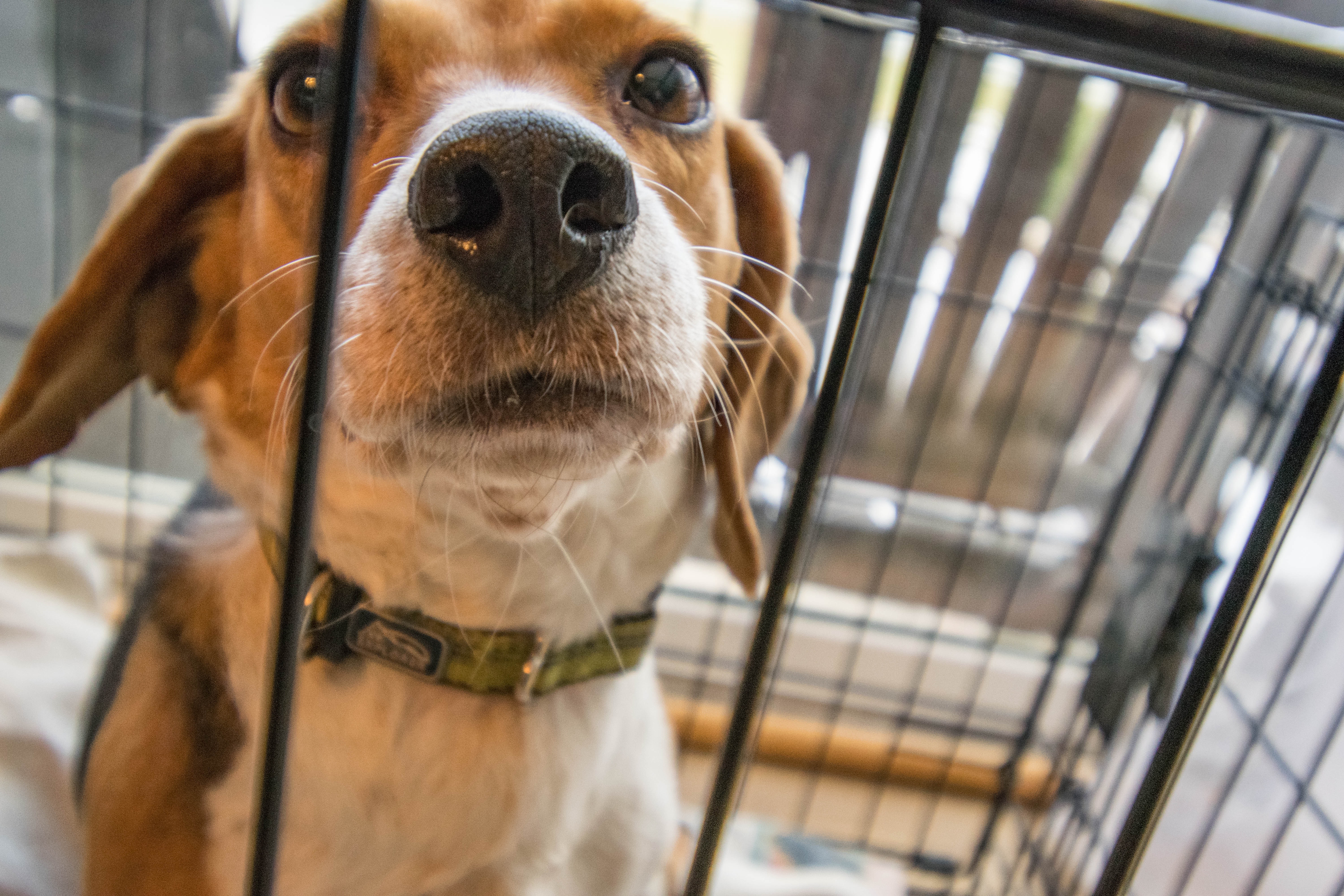
Once again, I would like to start off by saying I am not a veterinarian or certified dog trainer. I am a self-proclaimed dog expert. The information I am sharing is purely my experience with my dogs as well as other dogs. For more information or any concerns, consult your vet or trainer, or visit the sources I will have linked below. Now, on with the blog we go!
People often think that crating your dog is abusive or mean, but this is not the case. Of course, if you do crate train your dog, they should not be left in the crate all day. They also should get plenty of exercise to make up for the time spent in the crate. I am not saying that (horrible) people don’t abuse the use of dog crates, I am just saying that is not their intended purpose.
Another common misconception about dog crates is that they are to be used for punishment. This is also false. If a crate is used for punishment, your dog will become afraid of it and will not like it. You will also most likely have a hard time getting them to go into the crate on their own, without having to force them.
So… What Is the Purpose of a Dog Crate and How do You Use it Properly?
A crate is a way for you to keep your dog safe, as well as your guests. A crate is a place for your dog to go and have their own space. It is like a bedroom. When you need time away from family, roommates, etc. you likely retreat to your bedroom. A crate serves the same purpose for dogs. It is also a great training tool if you have a destructive puppy. It is a place you can put your puppy when you leave the house, assuring none of your furniture or things are destroyed, and your puppy cannot harm itself by eating things it shouldn’t.
When you start off crate training, leave the door open and let your dog explore. Be sure to praise them when they go in it. You should even give them a treat when it is time to close them in for the night. Do not give in if you hear them crying at first, because then they will know if they cry, they will get out. You should also have some sort of command that goes along with it. In my family we use, “Go in your house” but, you can come up with your own if you’d like! You should also make sure the crate is comfortable. Put a dog bed, blankets, or a crate mat in it so it is a desirable place for your dog to go. They even have waterproof crate mats if you’re training a puppy and are worried about accidents.
As long as you never use it as a punishment, your dog will grow to love it like my family dogs and my dog does! They all go in there without being asked just to sleep, lay down, or be left alone. We do not even shut my dog in his because he is trained, we leave it open all night and he just chooses to sleep in there. Just make sure you get the right size crate for your dog. Your dog should be able to stand up all the way and spin around. Never force a dog to use a crate that is too small for them! It is also important to note that if you rescue a dog, they may have trauma or fears about being crated based on a previous owner. If it seems to be traumatic to your dog, it may not be the right training option, or it may take more time for them to acclimate to it. If they are very fearful, you may need to get rid of the crate altogether! Also, it is recommended that you take off your dog’s collar if they are going to be shut in the crate unattended (while you’re asleep or not home). This is recommended because their collar can get caught on the fabric or wiring of the crate, which can lead to serious injury.
Crate Recommendations (again, make sure you get the right size):
Soft-Sided Crate: I do not recommend this type of crate if your dog is very destructive or rambunctious.
Wire Crate: Easy to clean, suitable for puppies still in potty training. More sturdy for destroyers.
The source you can check out for more information: Crate Training 101
 Adopt Don't Shop: All Things Dog