
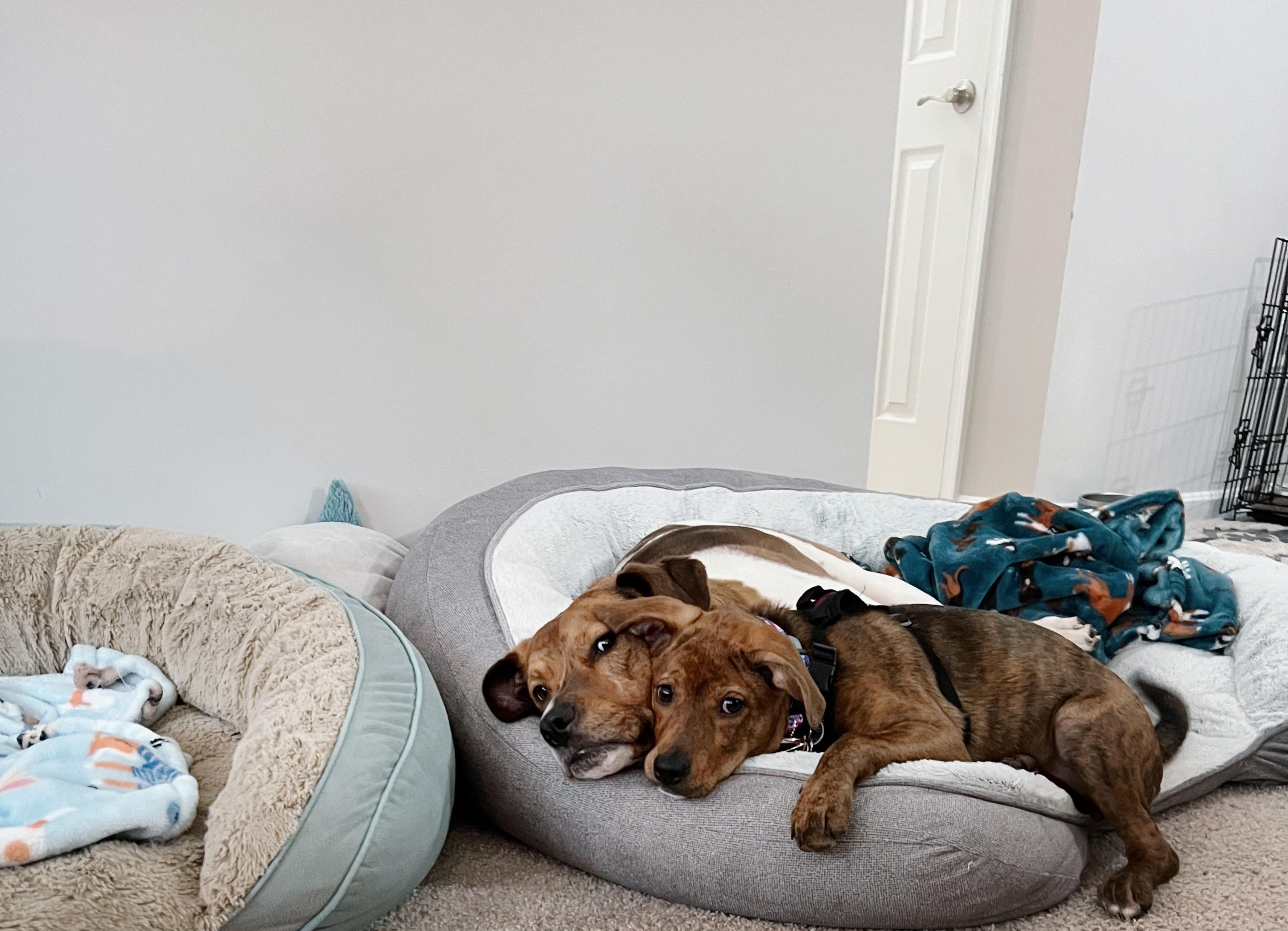
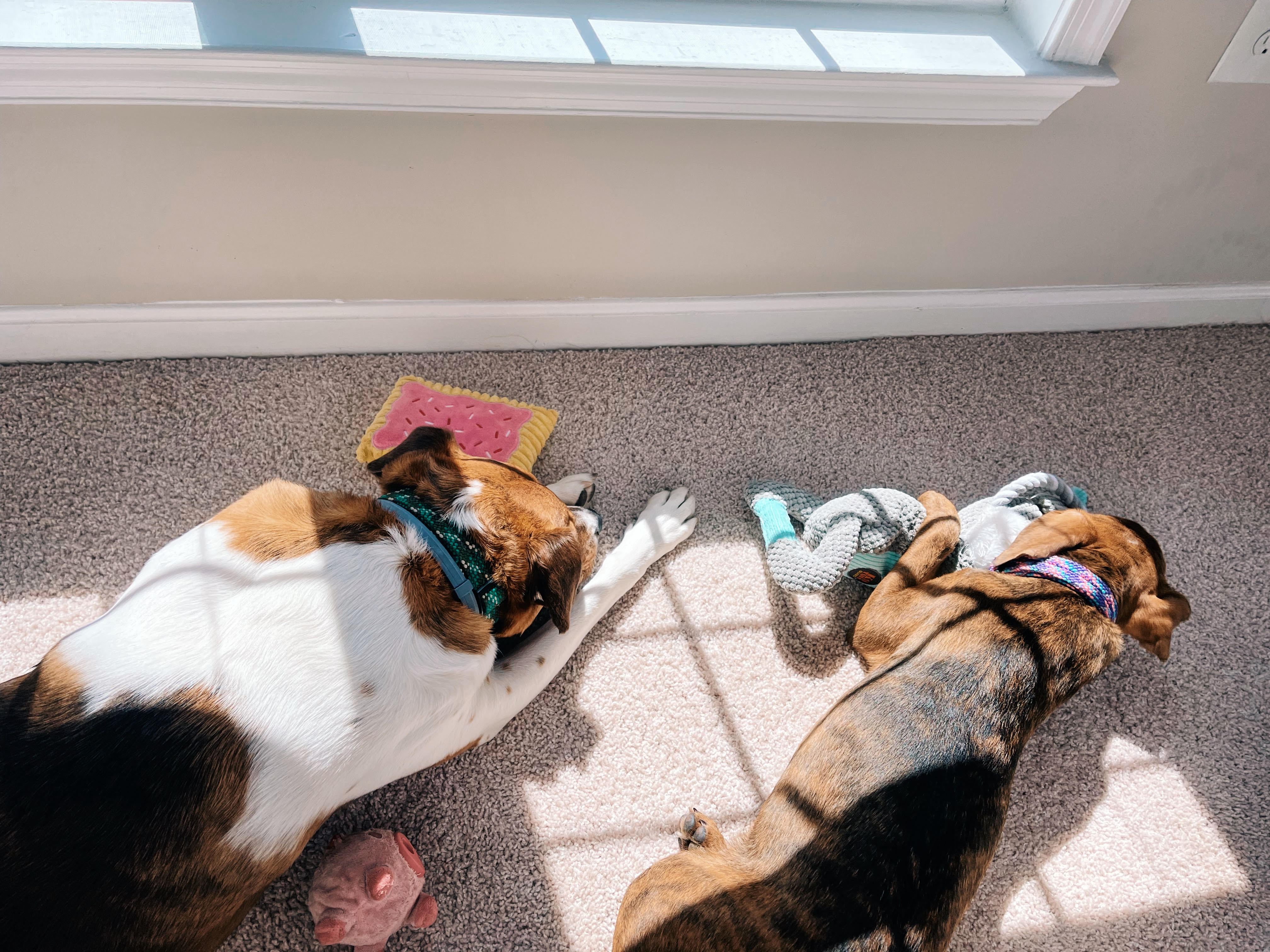
You don’t need multiple dogs to have a pack. Your pack is your family and your dog or dogs. Our pack for 4 years was my girlfriend, Scooby, and myself. We decided we were ready to expand our pack and get another dog, Tundra. Tundra is a 5-month-old mutt that now fits perfectly with our fur family.
However, there were hurdles and bumps in the road we had to overcome to introduce and acclimate her, while also making sure Scooby was comfortable and happy. If you are considering expanding your pack, here is all the advice from our experience.
Once again, I am not a veterinarian or certified dog trainer. I am a self-proclaimed dog expert. The information I am sharing is purely my experience with my dogs, as well as the research I did and suggestions from a dog trainer. For more information or any concerns, consult your vet or trainer, or visit the sources I will have linked below. Now, on with the blog we go!
The first step is choosing the right dog or puppy for your current dog based on both their temperaments. Some dogs are naturally more dominant, while others are more submissive. Trust your instincts! You know your dog and their behaviors. For example, Scooby has always been a more dominant dog. He likes to tell other dogs when he’s had enough, if they growl back or do not heed his warning, a scuffle can happen. He is more suited to be paired with a female submissive dog, so that is what we did.
We also knew a puppy would be best for Scooby based on previous experiences with him. Puppies are a lot of work, but if your dog is particular with his playmates, a puppy could be the right choice. Your current dog will mold and teach the puppy to be the best playmate for them.
Ideally, try to find a shelter or rescue that allows a meet and greet with your dog and the dog you may potentially be adopting. It is ultimately your dog’s decision whether the newcomer will be a good fit or not. Whether a meet and greet is or isn’t allowed, you should still reintroduce the dogs once you bring the new one home.
How to Bring the New Dog into Your Home:
When bringing a new dog to your home, remember it is just as much your current dog’s space as it is your own. Do not immediately bring the new dog or puppy into your home. This can cause your dog to feel threatened and territorial, which will make it a negative experience for them and the new dog alike.
Introduce the dogs on neutral grounds outside. If you have a yard, introduce them on leashes on the sidewalk. Let them say a brief hello, and then take them for a walk together. This works better with two people! If you live alone, have a friend, parent, or significant other help you.
If all goes well and your current dog feels comfortable, you can walk them both inside. Once both dogs are safely inside, be sure to look for signs of resource guarding.
Signs of Resource Guarding and How to Combat it:
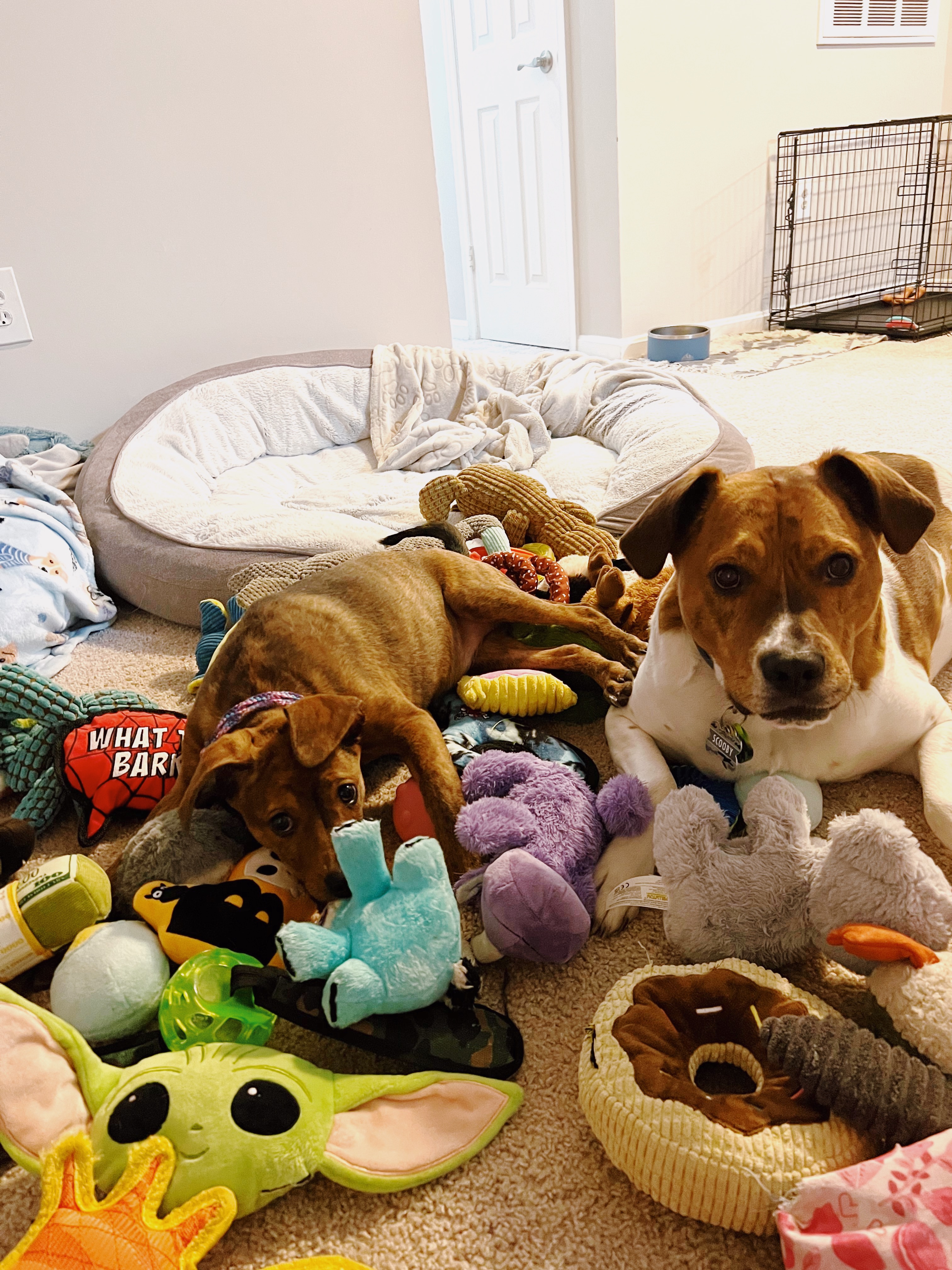
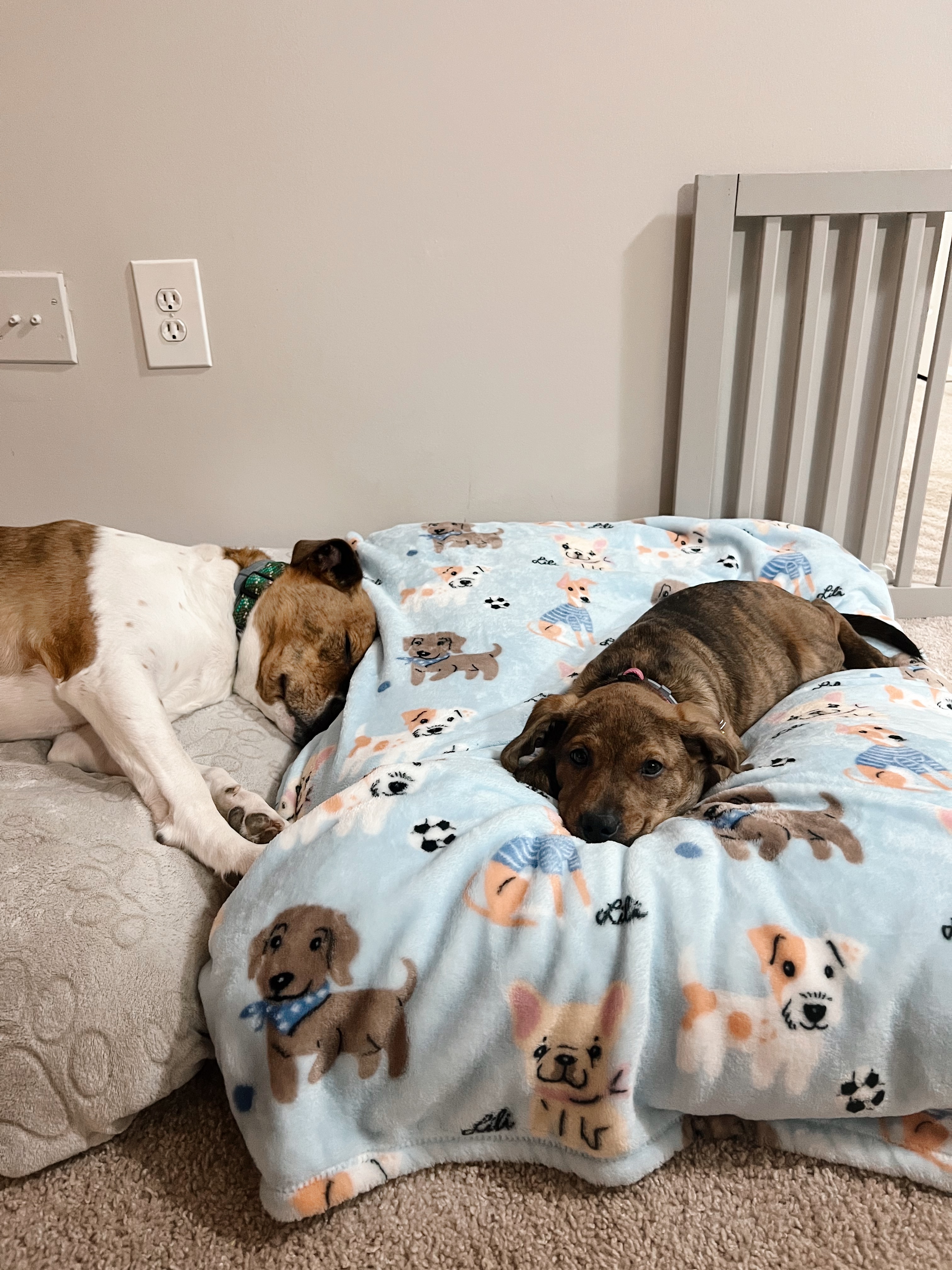
Resource guarding is when your dog growls at or bites a person or dog trying to take a toy from them, lay on their bed, etc. A dog may not resource guard everything, and may only behave this way towards other dogs. For example, Scooby tends to guard his water, certain toys, and his bed from other dogs.
A good way to start combatting resource guarding is to make sure there are enough resources for both or all of the dogs. This means 2 beds, 2 water bowls, etc. Also, feed them separately. This can mean feeding them in different rooms, or putting a baby gate between them. This way your dog does not feel like resources are being taken from them. There should be plenty to go around!
What worked for us was to take up all his toys and his bed. We set out water bowls that were not his to keep the space as neutral as possible. As time went on, we set his and her beds up, and introduced neutral toys that again were not his. With time as he was comfortable, we introduced his toys. Now, he very rarely has issues sharing. It is normal for your current dog to correct the new dog or puppy, so let’s discuss what is acceptable for both you and your current dog.
How Your Current Dog and You Should Act Towards the New Dog:
It is important to look out for signs of your current dog being uncomfortable or resource guarding from the new dog. However, how you react to their reactions is equally as important. Remember, they were there first! In pack hierarchy, you are at the top (with other household members), then your current dog, then the new dog at the bottom. They should be allowed to correct the new dog or puppy. Appropriate corrections include growling when the dog is in their face or space, or evening nipping them.
A correction is only inappropriate if your dog bites the new dog and latches on/ attacks them. Try not to reprimand your dog when they are correcting the new dog. The new dog has to learn what behaviors are accepted and unaccepted. If the new dog is not understanding corrections and you see your current dog grow increasingly uncomfortable, separate the two for a while. Separation can include gating or crating the dogs away from each other to allow a cooldown period.
Remember to keep interactions between your current and new dog positive. This may mean keeping exposure and playtime brief for a period until they are both more comfortable. Reward and praise your dog for sharing and playing with the new dog, and be sure to give your current dog more attention than the new dog. This way they know they are still special and don’t become jealous. Also, try to keep your original dog’s schedule or routine the same, but add the new dog to it.
Adding a new dog to your family is a process, and they likely will not be acclimated overnight. You will become frustrated or feel hopeless at times. All the cute pictures above did not happen right away. It takes time, patience, and consistency. Don’t give up, and appreciate the small stuff. This can mean being overjoyed that they played together for 5 minutes, or that they laid down next to each other. In a couple of months, you will see your original dog and your new dog start to bond and understand each other and it will all be worth it!
For more information, visit the resources linked below. As always, feel free to reach out to me via my contact page! I have a lot more advice that was not mentioned and I’m happy to help! Resources: Humane Society, American Kennel Club, Lucky Dog Animal Rescue.
 Adopt Don't Shop: All Things Dog